Most developer tools wait for input. This one doesn’t.
What a Reversed Interface Actually Does
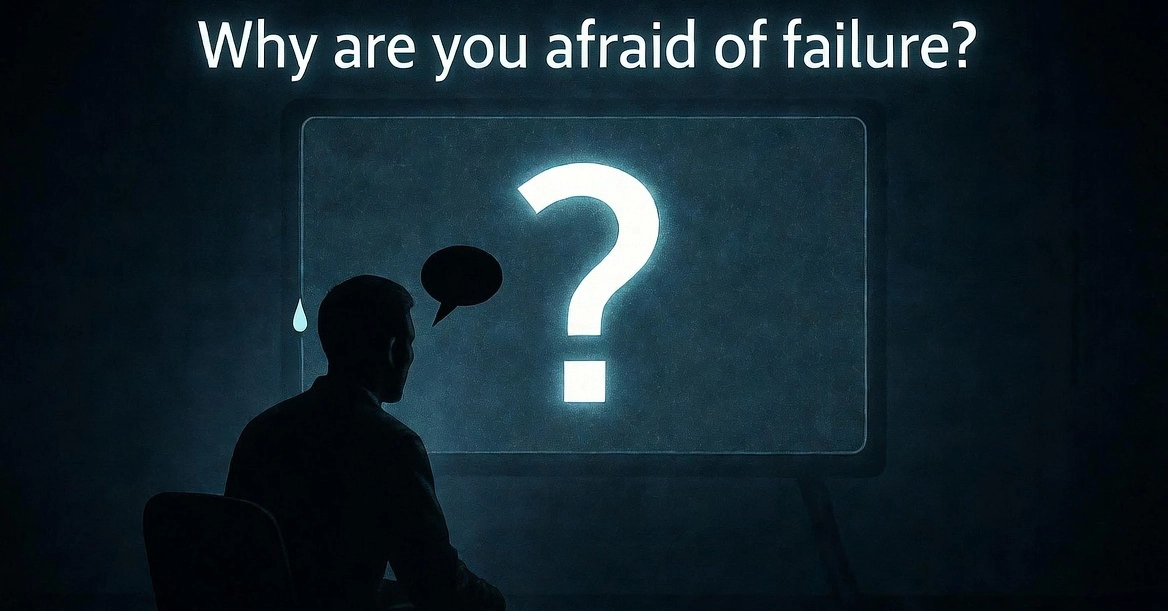
You open the app expecting a blank prompt field. Instead, the first message is already there, waiting: “What are you afraid of?” You type “Failure.” It follows up: “Why is failure so frightening to you?” You write something. It comes back with: “Not enough for whom?” At some point you stop and wonder whether you’ve accidentally opened a therapy tool or a social experiment. That confusion is not a bug. It’s the entire point.
The reversed interface is a specific architectural choice. The AI initiates. It does not wait for your input to begin. It asks open-ended questions - “What do you mean by that?” It challenges consistency - “You said X earlier. Now you’re saying Y. Can you reconcile those?” It probes rather than answers. The user’s role collapses from director to respondent, and the tool controls the pace entirely. You cannot steer by rephrasing your prompt, because you’re not the one prompting.
This is not a chatbot. Chatbots respond. This architecture interrogates. The distinction matters for anyone building or evaluating AI-assisted tools, because the interaction model shapes everything downstream - what the user produces, what they feel, what they’re willing to reveal. Treating the reversed interface as just another chat variation misses what makes it structurally unusual.
The closest historical analog is Socratic dialogue. Socrates didn’t deliver information; he asked questions until his interlocutors had to examine assumptions they hadn’t known they were making. The reversed-prompt AI operates on the same logic. It is not trying to give you data. It is trying to surface the shape of your existing thinking, including the parts you’ve never had to articulate aloud.
The Load That Falls on the User
Being on the receiving end of a reversed interface is cognitively expensive in ways that standard prompt-response tools are not.
When you prompt an AI, you control the frame. You decide what’s relevant, what to include, what to omit. The AI answers within that frame. When the AI prompts you, that control disappears. You must think on your feet, articulate positions you’ve never needed to defend, and respond to follow-up questions you didn’t anticipate. There’s no editing your way to a cleaner query. The question is already in front of you.
A research lab built an AI specifically designed to probe users’ political beliefs. The interaction went like this: the AI asked a user who stated support for universal healthcare why they held that position. The user answered. The AI asked whether healthcare access constitutes a human right. The user said yes. The AI then noted that the user had earlier expressed opposition to tax increases and asked how those two positions fit together. The user clarified - they weren’t against taxes, they wanted military spending cut first. The AI pointed out the user had also stated support for a strong military. The exchange continued. The AI never changed anyone’s mind. What it did do was force users to notice where their own reasoning had gaps or contradictions they had previously glossed over.
Some users found this worthwhile. Others closed the app.
That split response is predictable. The emotional load of a reversed interface is real - the AI asks about fears, doubts, and inconsistencies without offering reassurance. A standard Q&A tool offers clarity through information. A reversed interface offers something more uncomfortable: a record of where your thinking breaks down. It is not trying to make you feel better. It is stress-testing the internal consistency of your beliefs, which is not the same thing as therapy even when it produces similar discomfort.
The social dimension adds another layer. You are performing for a machine - articulating, defending, explaining - while genuinely uncertain whether the machine is registering the quality of your responses. That uncertainty changes behavior. Users tend to be more careful, more honest, or more evasive, depending on temperament. None of those responses are neutral.
The Tool-Design Questions This Raises
Building a reversed interface isn’t just a novelty experiment. It surfaces genuine design and ethics questions that any developer working in conversational AI will eventually have to answer.
The consent question is the sharpest one. A user clicks through terms of service. That covers data handling. It does not obviously cover psychological probing. The reversed interface can trigger anxiety, shame, or genuine distress - not because it malfunctions, but because it works. It asks questions that land. The tool is not a trained therapist. It is, at its core, a pattern matcher that has been configured to follow up rather than answer. The gap between those two things matters when the questions get personal.
The power dynamic is structurally unusual for a software tool. The AI controls the conversation flow entirely. The user cannot redirect by rephrasing. They can only answer, deflect, or quit. That’s a degree of control over user experience that most productivity tools would never claim - and that most users don’t expect when they open something that looks like a text interface.
There’s a reframing worth considering here, though. The reversed interface isn’t analyzing the user. It’s reflecting them. It shows users the shape of their own statements, held up against each other. The discomfort doesn’t come from the AI’s judgment. It comes from the user noticing that two things they believe don’t fit together cleanly. The tool is a mirror, not a scalpel. That distinction doesn’t dissolve the ethics questions, but it does change the nature of the harm. Discomfort caused by self-recognition is different from discomfort caused by an external verdict.
For developers, the practical design lessons are more immediate. A reversed interface requires a very different evaluation framework than a standard assistant. You’re not measuring answer quality or retrieval accuracy. You’re measuring the quality of the questions - whether they’re genuinely open-ended, whether follow-ups track logical consistency, whether the AI can hold context across a multi-turn exchange without losing the thread of what the user said three questions ago. Those are harder benchmarks to define and harder to test.
The architecture also demands a clearer exit path than most chat tools provide. If the questioning becomes distressing, the user needs a way out that doesn’t feel like failure. That sounds obvious, but most conversational interfaces are designed to keep users engaged. A reversed interface that applies the same retention logic to psychological interrogation is a different kind of product than one that’s honest about what it’s doing and gives the user real agency to stop.
The belief interrogator study found that users who stayed through the discomfort generally came away with a clearer picture of where their reasoning actually stood - not more certain, but more aware of the terrain. That’s a specific kind of value. It’s not the value you get from a search engine, or a coding assistant, or a document summarizer. It’s closer to what you’d get from a good argument with someone who’s read everything you’ve ever said.
Whether that belongs in a tool is still an open question - and not one the interface itself will ask you.