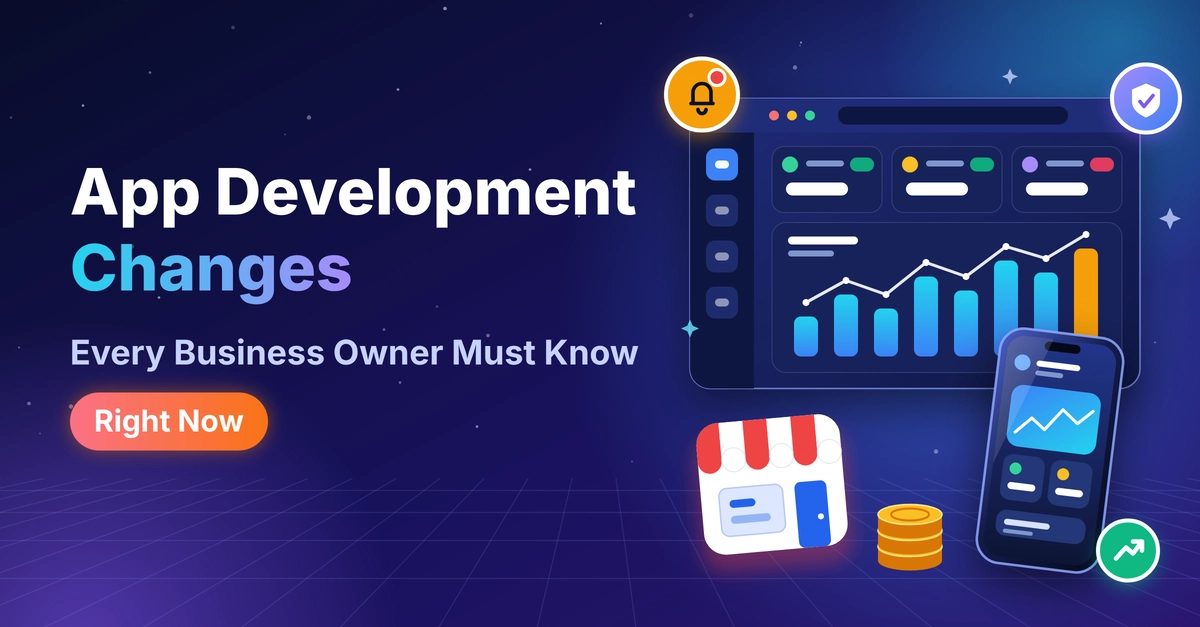
Building an app is easy now. Keeping it live and visible on the stores is the harder part. Here are three changes from the last few weeks that every dev (and every business owner who hires one) should have on the radar.
1. Foldable-ready apps are becoming a requirement
On Nov 18, 2026, Google Play announced new adaptive quality requirements. Per the Android Developers blog, these start in April 2027:
- Your app must meet at least Tier 3 (“adaptive ready”) of Android’s adaptive app quality guidelines.
- Your store listing needs 3 foldable screenshots on top of the 2 phone screenshots.
What Tier 3 means in practice:
- The app fills the available display (no letterboxing or compatibility mode).
- State survives rotation, folding/unfolding, and resizing: scroll position, text input, media playback.
- Multi-window works.
What if you miss it? The app can no longer publish or update on Google Play, and it may get reduced visibility. Existing apps that are never updated stay downloadable. But a hotfix or security patch could get blocked.
Also on the calendar: from August 2027, new apps and updates must target API level 37 (Android 17).
Quick win for state: if you use Jetpack Compose, start with rememberSaveable:
var query by rememberSaveable { mutableStateOf("") }Then run your app on the foldable emulators (1:1 and 4:3 inner display) and fold, unfold, and rotate. If anything resets, you have found your first bug. Foldable screenshot upload is already live in Play Console under Grow > Store presence > Store listings.
2. Inactive apps can be removed from the App Store
Apple has updated its policy language so that apps that fail to attract downloads or ongoing user activity can be removed, even if they passed review at launch.
So “ship it and forget it” is now a risk, not a strategy.
A few smaller Apple changes to check this week:
- Nov 16: App Store Connect added new content descriptors so your age rating reflects your app’s features and local rules.
- Dec 3: automatic price adjustments start in several countries, along with tax updates.
3. AI is part of the dev workflow now
AI coding tools went from “nice extra” to daily driver. Vibe coding, describing what you want in plain language and letting AI draft it, has grown from a demo trend into a real workflow.
This week, Google launched Gemini 4 Neon for coding, with a 1 million-token context window. Even Google’s foldable guidance suggests using an AI agent with the Jetpack Compose adaptive skill in Android Studio to optimize your app.
But AI writes drafts. It does not know your users, your threat model, or your brand. My rule of thumb:
- Let AI handle: scaffolding, boilerplate, layout fixes across screen sizes.
- Keep human: code review, security checks, edge cases, real-device testing.
What this means for your business
All three changes point the same way. AI makes building faster, and the stores expect more: more screen sizes, more updates, more care.
If your app is a few years old, it may need more than small patches. A good app development company can test across devices, keep up with store policy, and ship updates without surprises.
Pre-2027 checklist
- Test on foldables and tablets, not just phones.
- Make sure UI state survives configuration changes.
- Prepare foldable screenshots for Play Console.
- Plan regular updates to keep the app active.
- Review age ratings, pricing, and tax settings.
- Add API level 37 to your roadmap (August 2027).
- Use AI to move faster, and keep humans on quality and security.
Over to you
Which of these three will hit your app first: foldables, store cleanup, or the AI shift? Drop it in the comments. I am curious what other teams are planning.